

The whole voice stack, rebuilt for the CPU.
A cascade like everyone else's — except the layers that decide cost and feel are our own models, and they run on the processor you already have.
Five stages. Four are ours.
Audio comes in, speech goes out. Everything between them is a model we chose or built for real-time inference without a GPU.
- Psst Noise suppression
- Turno Turn-taking
- Conv Speech-to-text
- LLM Your provider
- Versa Speech synthesis
- PsstSpectral-gating noise suppression, run as middleware ahead of transcription. Isolates speech in cafes, cars, wind and open offices. Ours, CPU.
- TurnoTurn-taking and barge-in decided on the raw audio stream — a real interruption versus a “mm-hmm” — instead of silence-timeout heuristics. Ours, CPU.
- ConvLocal CPU speech-to-text tuned for conversational turns, with a cloud fallback when it wins. A fully proprietary next generation is in training on MareNostrum 5. Ours, CPU.
- LLMBest-in-class low-latency providers, pluggable, orchestrated by our pipeline rather than stitched together client-side. Provider.
- VersaNon-autoregressive speech synthesis built on flow matching — parallel generation instead of token-by-token. 33 languages, 10 voices, visemes, 44.1 kHz streaming on ARM64. Ours, CPU.
Everything around the models.
Agents, phone numbers, a speech studio, transcription, analytics. All on app.lokutor.com, all on the same minutes.
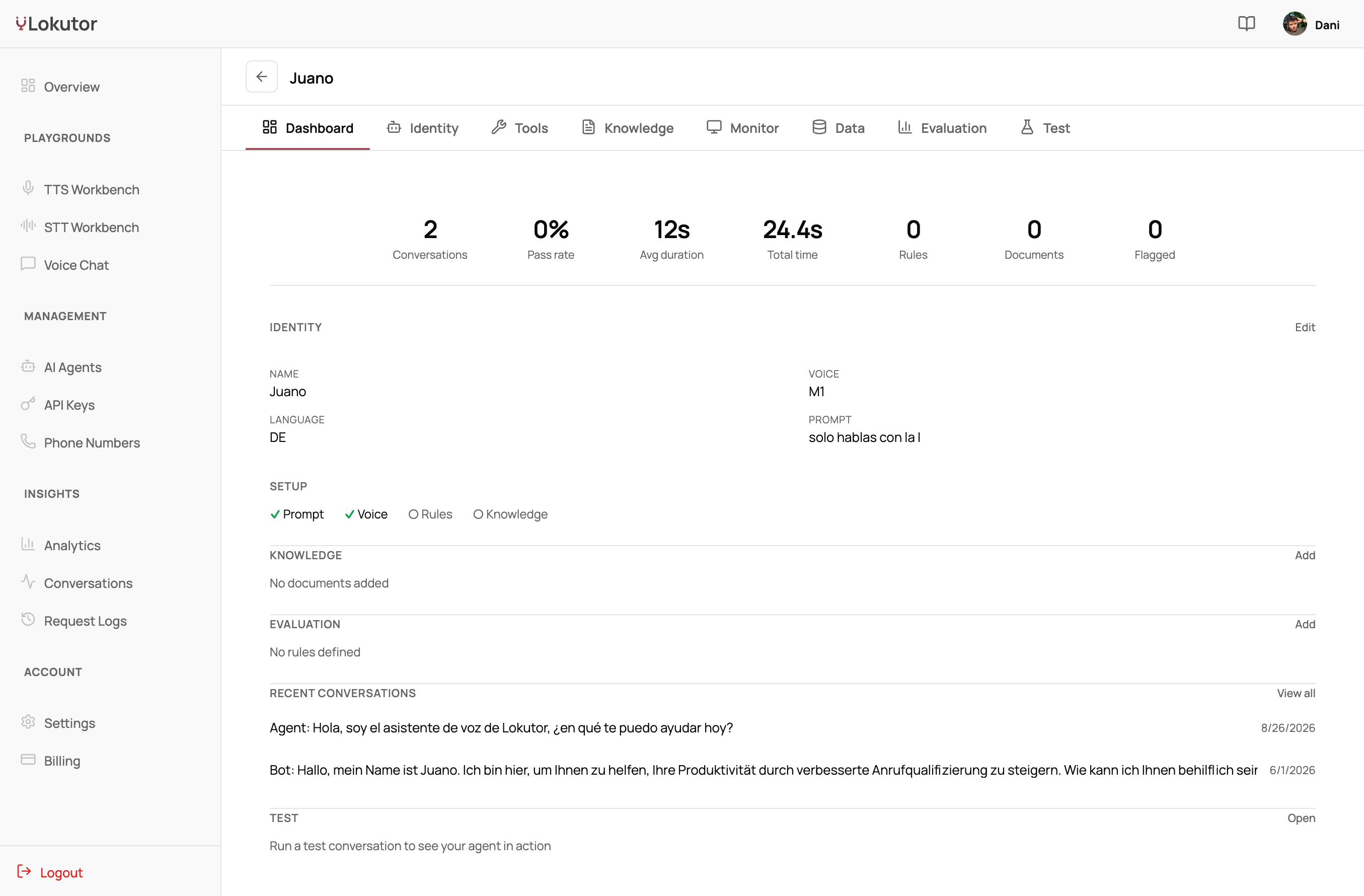
Build an agent in the dashboard.
Prompt, voice, language, tools and cross-call memory in one form. Talk to it in the browser before it ever takes a call.
- 10 voices, 33 languages
- Tool calling and memory
- Test it live, in the browser
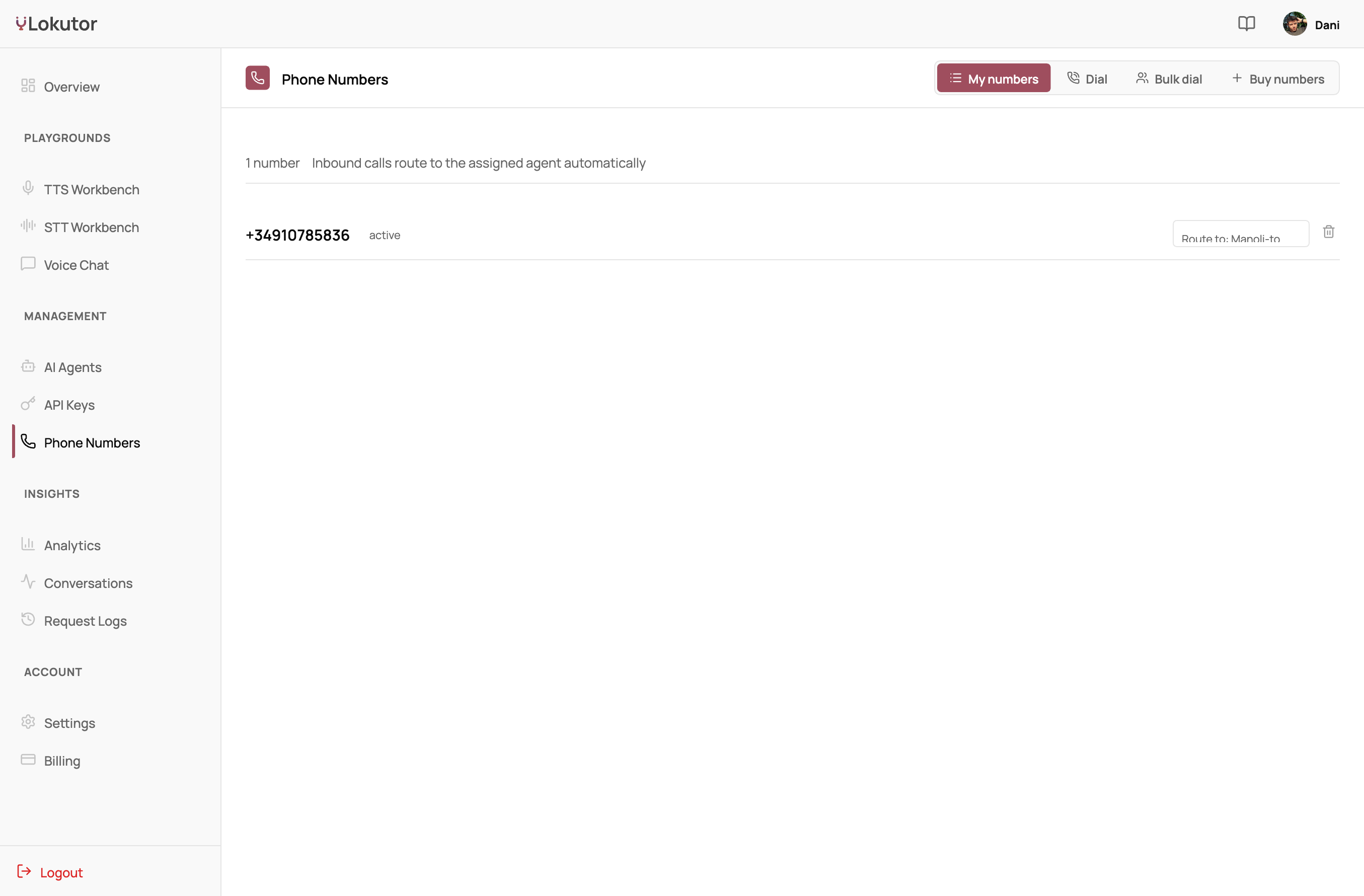
Give it a number.
Provision phone numbers, take inbound calls, place outbound ones, and run bulk campaigns from the same agent.
- Inbound and outbound
- Single and bulk dialing
- Numbers from $5 a month
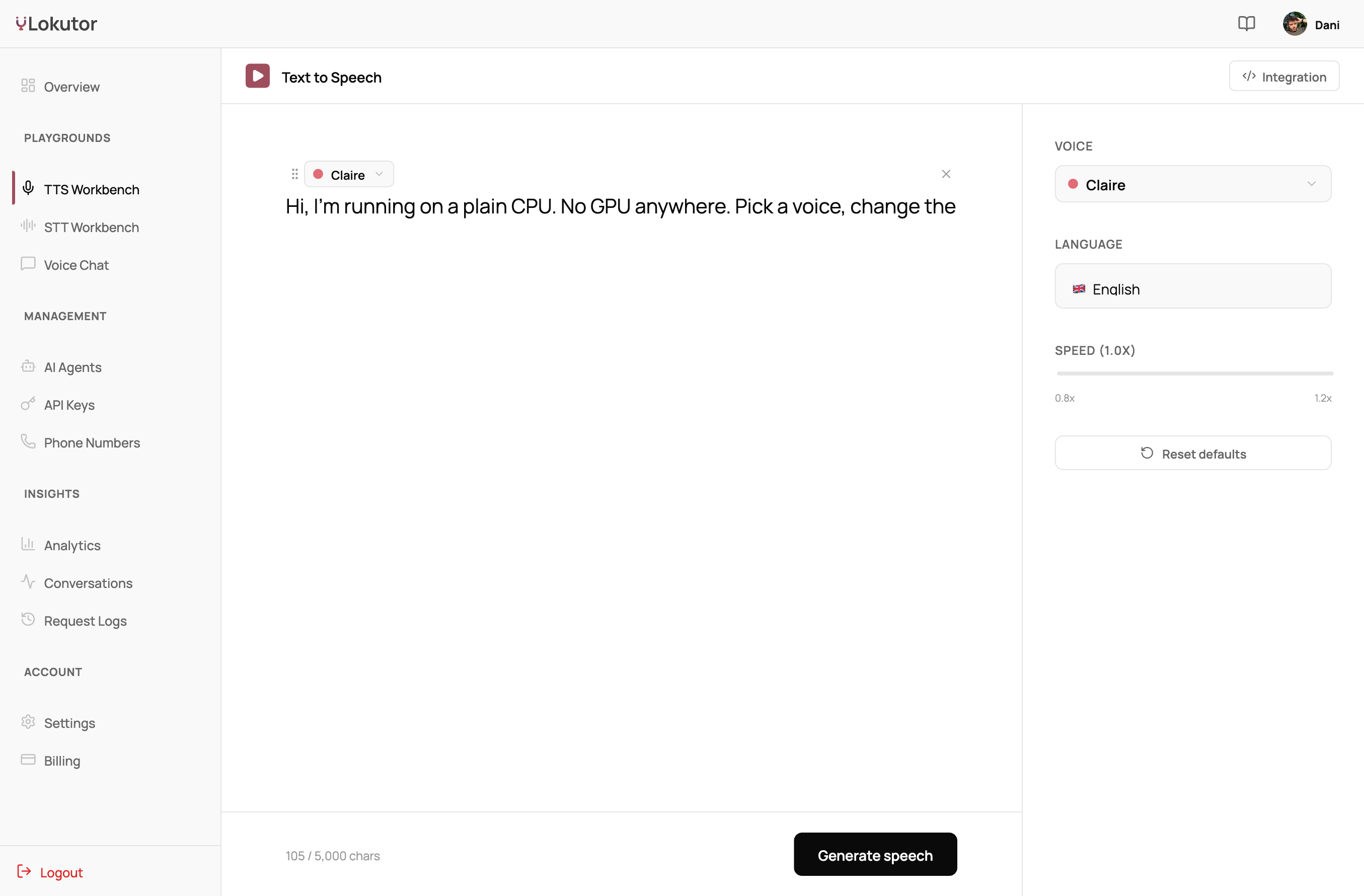
A speech studio, not just an endpoint.
Type, pick a voice, hear it. Streaming synthesis with visemes for lip-sync, and voice cloning on Growth and above.
- Streams from the first chunk
- Visemes included
- Voice cloning on Growth+
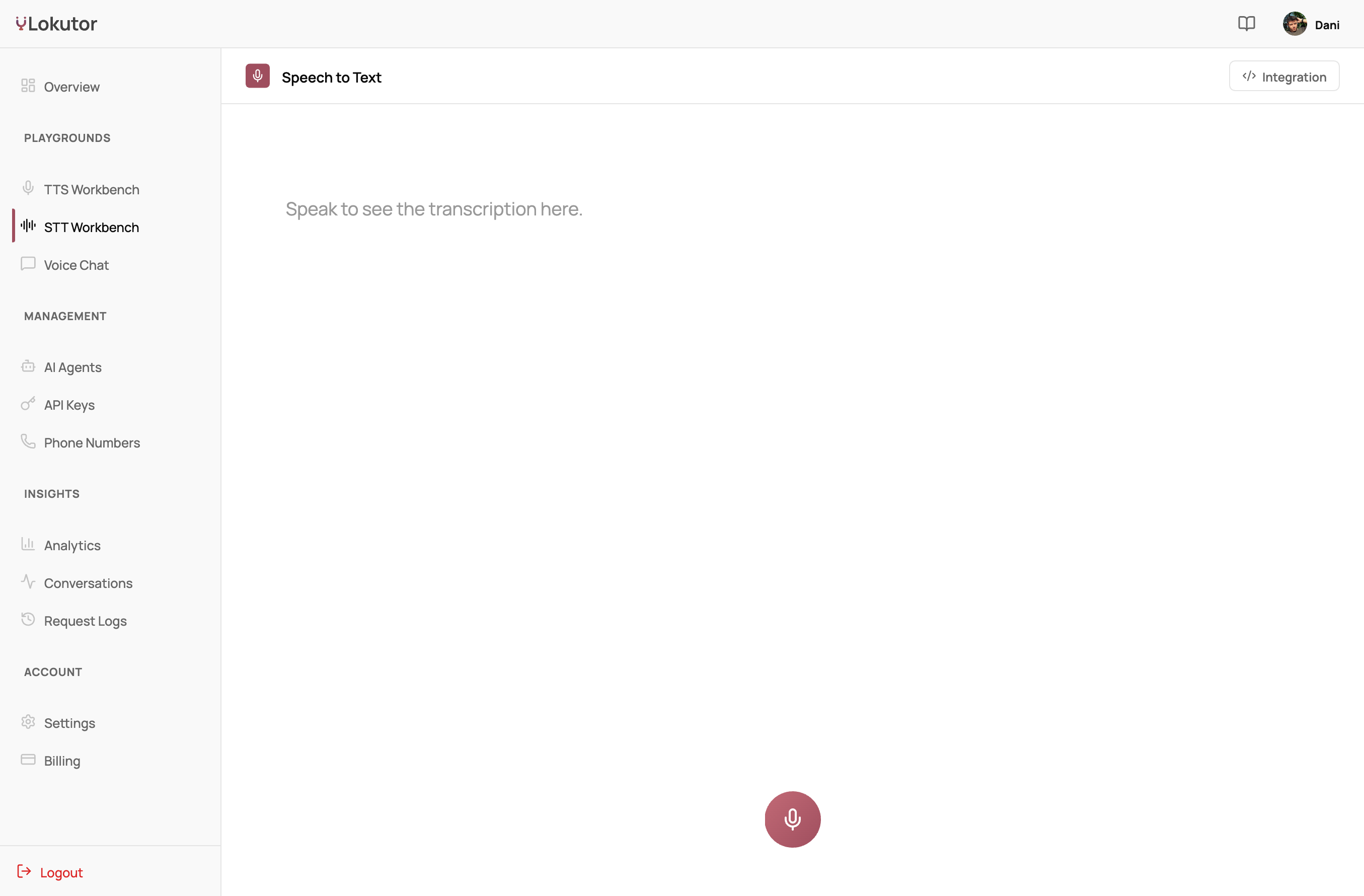
Conv and Psst on their own.
Transcribe audio and clean it up as standalone endpoints, the same models the agent uses, billed on the same minutes.
- Speech-to-text in 33 languages
- Noise suppression as middleware
- One key, one bill
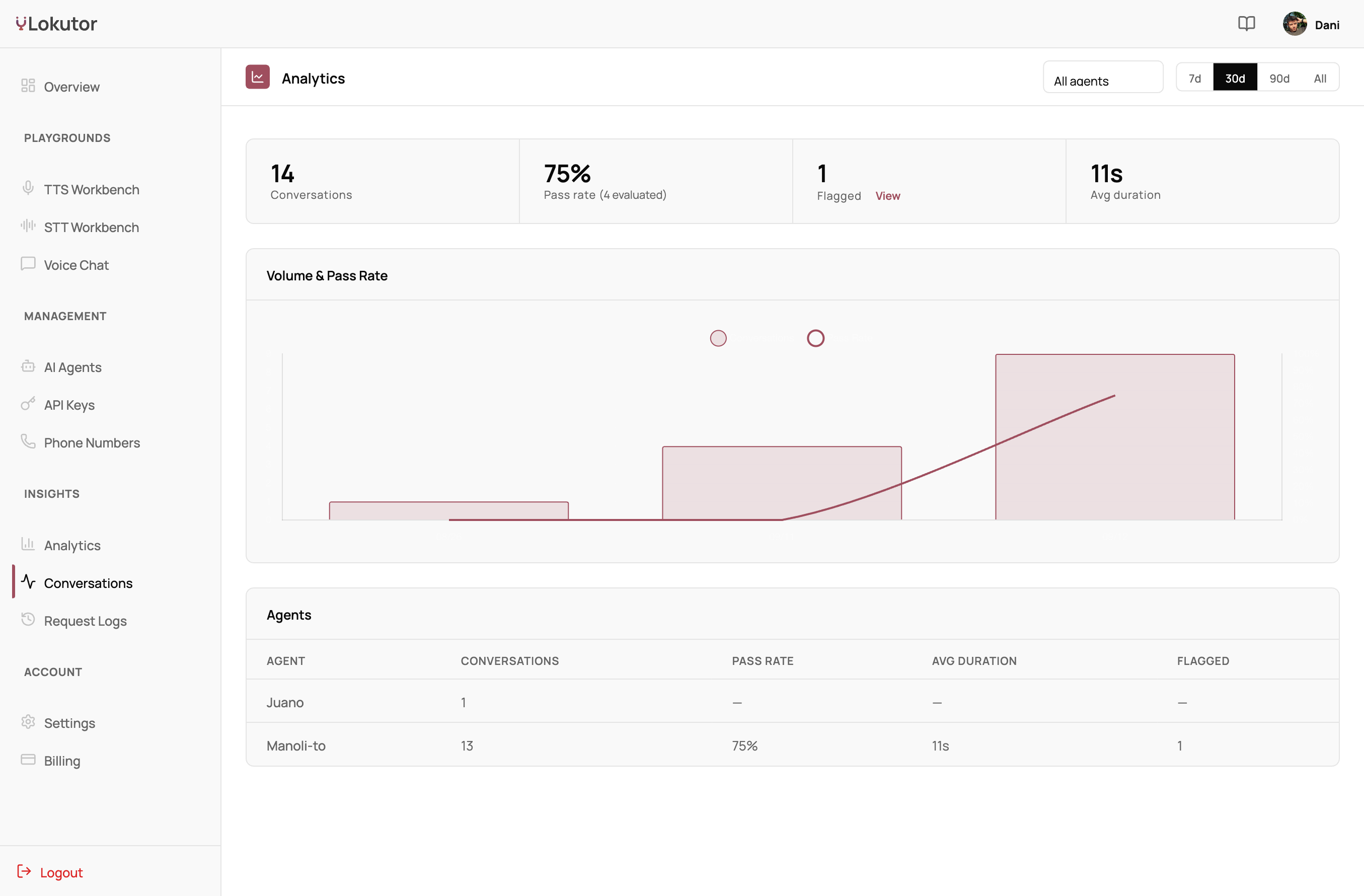
See every conversation.
Transcripts, per-turn latency, minutes used and errors, per agent and per call, so you know what the agent said and how fast.
- Transcripts per call
- Latency per turn
- Usage against your plan
A voice agent in ten lines.
JavaScript and Python SDKs, a plain REST endpoint for speech, and a Pipecat service if you already have a pipeline.

import { VoiceAgentClient } from '@lokutor/sdk';

const agent = new VoiceAgentClient({
  apiKey: 'YOUR_API_KEY',
  prompt: 'You are the support agent for Acme.',
  voice: 'F1',
  language: 'en',
  serverUrl: 'wss://api.lokutor.com/ws/agent',
});

await agent.startManaged();import requests
r = requests.post(
"https://api.lokutor.com/tts/synthesize",
headers={"Authorization": "Bearer YOUR_API_KEY"},
json={"text": "Hello from a CPU.", "voice_id": "F1", "lang": "en"},
)
open("audio.wav", "wb").write(r.content)curl -X POST "https://api.lokutor.com/tts/synthesize" \
-H "Authorization: Bearer YOUR_API_KEY" \
-H "Content-Type: application/json" \
-d '{"text": "Hello from a CPU.", "voice_id": "F1", "lang": "en"}' \
--output audio.wav# pip install pipecat-lokutor
from pipecat_lokutor import LokutorTTSService
tts = LokutorTTSService(api_key="YOUR_API_KEY", sample_rate=44100)
# use it as the TTS stage of any Pipecat pipeline
See the numbers behind it.
Where the time goes in a turn, on what hardware, with the methodology to reproduce it.